
Digital Marketing: The Smart Way to Grow Your Business Online
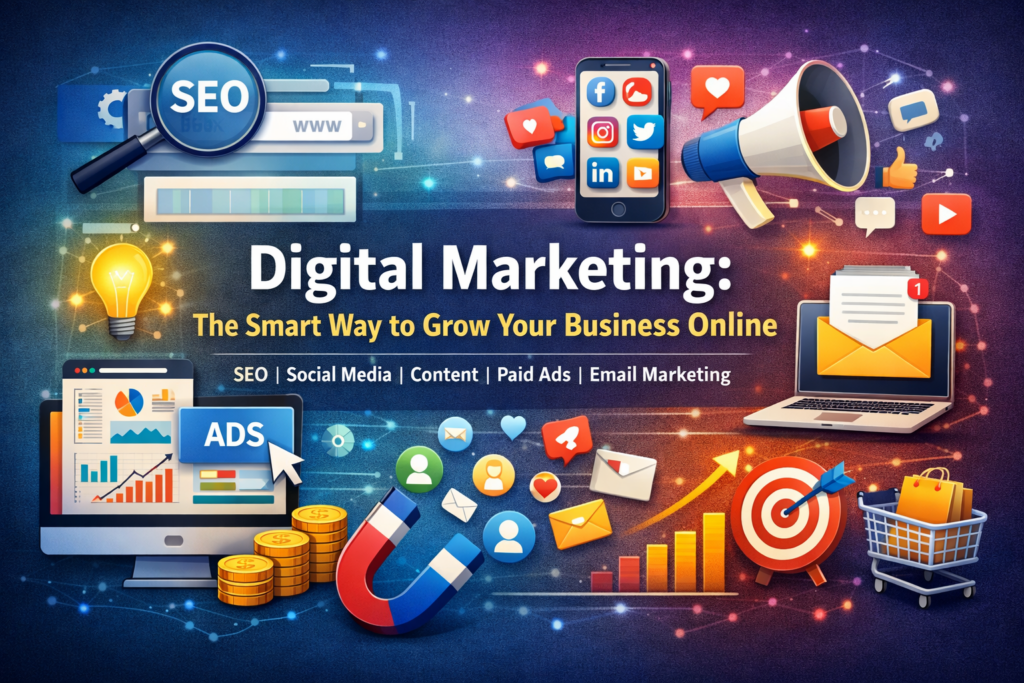
Digital Marketing: The Smart Way to Grow Your Business Online In today’s fast-moving digital world, traditional marketing alone is no longer enough. Customers spend most of their time online—searching on Google, scrolling social media, watching videos, and shopping on e-commerce platforms. This is where digital marketing plays a powerful role. Digital marketing is the promotion of products, services, or brands through online channels to reach the right audience at the right time. One of the biggest advantages of digital marketing is reach. Unlike offline marketing, which is limited by location, digital marketing allows businesses to connect with customers globally. Whether you are a small local business or a large brand, digital platforms give you equal opportunities to grow, compete, and build visibility. Key Components of Digital Marketing :- Search Engine Optimization (SEO) :-SEO focuses on improving a website’s visibility on search engines like Google. When users search for products or services, SEO helps your website appear on the top results organically. Good SEO includes keyword research, quality content, fast website speed, and mobile optimization. It builds long-term traffic and trust. Search Engine Marketing (SEM / Google Ads) :-SEM involves paid advertising on search engines. With Google Ads, businesses can instantly appear at the top of search results by bidding on keywords. It is cost-effective, measurable, and delivers quick results, making it ideal for lead generation and sales. Social Media Marketing (SMM) :-Social media platforms such as Instagram, Facebook, LinkedIn, X (Twitter), and YouTube help brands connect directly with their audience. Social Media Marketing includes both organic content (posts, reels, stories) and paid ads. It boosts brand awareness, engagement, and customer loyalty. Content Marketing :-Content is the heart of digital marketing. Blogs, videos, infographics, reels, and podcasts educate, inform, and inspire audiences. High-quality content builds trust and positions a brand as an expert in its industry. Email Marketing :-Email marketing remains one of the most effective digital strategies. It helps nurture leads, retain customers, and promote offers directly to inboxes. Personalized emails increase conversions and maintain long-term relationships with customers. Affiliate & Influencer Marketing :-Brands collaborate with affiliates and influencers to promote products to their audience. This strategy builds credibility and reaches niche markets faster through trusted voices. Why Digital Marketing Is Important Digital marketing is measurable. Tools like Google Analytics and Meta Ads Manager allow businesses to track performance, clicks, conversions, and ROI in real time. This data helps improve strategies and reduce wasted spending. It is also cost-effective compared to traditional advertising. Businesses can start with small budgets, target specific audiences, and scale campaigns based on results. Another key benefit is customer engagement. Digital platforms allow two-way communication through comments, messages, reviews, and feedback. This builds strong relationships and improves brand reputation. Digital Marketing in E-Commerce For e-commerce businesses, digital marketing is essential. SEO brings organic traffic, social media creates brand awareness, paid ads drive instant sales, and email marketing boosts repeat purchases. A strong digital strategy directly impacts online revenue and growth. Conclusion Digital marketing is no longer optional—it is a necessity for business success. With the right mix of SEO, social media, content, ads, and email marketing, brands can build visibility, trust, and long-term growth. In a digital-first world, businesses that adapt and invest in digital marketing stay ahead of the competition and connect better with their customers.