Author name: admin

blog

The Power of SEO in Growing Your Online Business

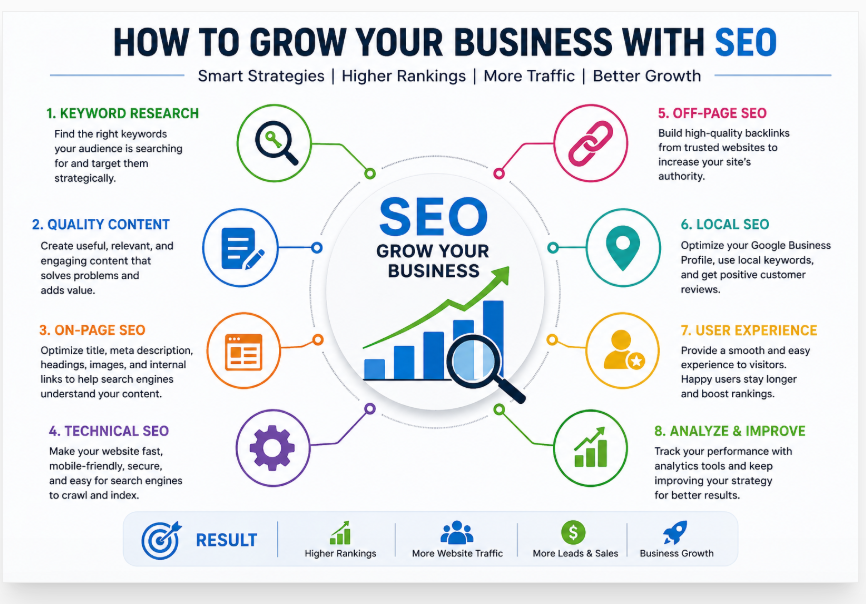
The Power of SEO in Growing Your Online Business Growing a business through SEO (Search Engine Optimization) is one of the most effective and long-term strategies in digital marketing. Unlike paid ads, SEO helps you attract organic traffic, build trust, and create a strong online presence. To successfully grow your business using SEO, you need the right strategy, consistency, and focus on user needs. The first step is understanding your target audience and choosing the right keywords. Keywords are the words people type into search engines when looking for products or services. You should research and select keywords that are relevant to your business and have good search volume. Using tools like keyword planners can help you find the best keywords. Once you have them, naturally include these keywords in your website content, blogs, headings, and meta descriptions. The next important step is creating high-quality content. Content is the backbone of SEO. Your website should provide useful, informative, and engaging content that solves users’ problems. This can include blog posts, service pages, FAQs, and guides. When users find value in your content, they spend more time on your site, which improves your rankings. Regularly updating your content also signals to search engines that your website is active. On-page SEO plays a key role in improving your website visibility. This includes optimizing title tags, meta descriptions, headers (H1, H2), images, and internal linking. Your website should be easy to navigate so users can find information quickly. Proper use of keywords and clear structure helps search engines understand your content better. Technical SEO is equally important. Your website must be fast, mobile-friendly, and secure (HTTPS). A slow or poorly designed website can increase bounce rate and reduce rankings. Make sure your site loads quickly, works well on mobile devices, and has a clean URL structure. Submitting a sitemap to search engines also helps in better indexing. Off-page SEO focuses on building your website’s authority. This mainly includes getting backlinks from other trusted websites. When high-quality sites link to your content, it improves your credibility in the eyes of search engines. You can build backlinks through guest posting, collaborations, and sharing valuable content that others want to reference. Local SEO is very important if you run a local business. Optimize your Google Business Profile with accurate details like name, address, phone number, and working hours. Encourage customers to leave reviews, as positive reviews increase trust and improve local rankings. Use location-based keywords to target nearby customers. User experience (UX) also affects SEO. Your website should be easy to use, visually appealing, and provide a smooth experience. If users leave your site quickly, it sends negative signals to search engines. Make sure your design is clean, content is readable, and navigation is simple. Consistency and patience are key in SEO. Results do not come overnight, but with continuous effort, your website will start ranking higher. Track your performance using analytics tools to understand what is working and what needs improvement. In conclusion, SEO is a powerful way to grow your business online. By focusing on quality content, proper optimization, user experience, and consistent efforts, you can increase your visibility, attract more customers, and achieve long-term success.
blog

Social Media Marketing: A Powerful Tool for Business Growth

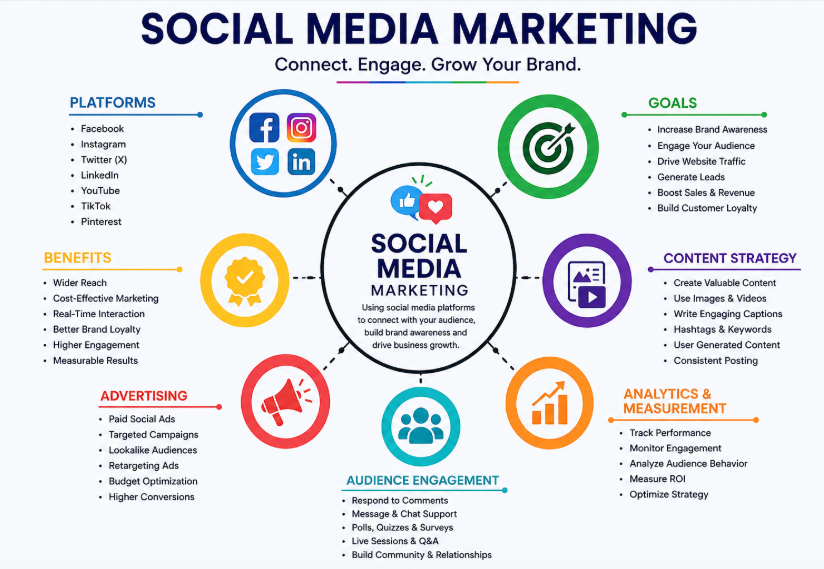
Social Media Marketing: A Powerful Tool for Business Growth In today’s digital era, social media has become an essential part of our daily lives. Platforms like Facebook, Instagram, LinkedIn, and Twitter (X) are no longer just for entertainment—they have evolved into powerful marketing tools. Social Media Marketing (SMM) is a key component of digital marketing that helps businesses connect with their audience, build brand awareness, and drive growth. Social media marketing is all about using social platforms to promote products or services. It allows businesses to reach a large audience in a cost-effective way. Unlike traditional marketing, SMM provides direct communication with customers, making it easier to understand their needs and preferences. One of the biggest advantages of social media marketing is brand awareness. Businesses can create and share engaging content such as posts, images, videos, and stories to attract attention. When users interact with this content by liking, sharing, or commenting, it increases visibility and helps the brand reach a wider audience. Content plays a crucial role in SMM. High-quality and engaging content is the key to success. This includes informative posts, creative visuals, short videos (reels), and interactive content like polls or quizzes. A strong content strategy ensures consistency and keeps the audience interested. Using relevant hashtags and trending topics also helps in reaching more people. Another important aspect of social media marketing is audience engagement. Businesses can directly communicate with their customers through comments, messages, and live sessions. This interaction builds trust and strengthens relationships. When customers feel valued, they are more likely to stay loyal to the brand. Social media advertising is also a powerful feature. Platforms offer paid advertising options that allow businesses to target specific audiences based on age, location, interests, and behavior. This targeted approach ensures that the content reaches the right people, increasing the chances of conversions and sales. Analytics and performance tracking are essential in SMM. Social media platforms provide insights into how posts and campaigns are performing. Metrics such as likes, shares, comments, reach, and engagement rate help businesses understand what works and what doesn’t. Based on this data, marketers can improve their strategies for better results. Consistency is another key factor in social media marketing. Posting regularly and maintaining a consistent brand voice helps in building a strong online presence. A well-planned content calendar ensures that the brand stays active and relevant. Social media marketing also supports other digital marketing strategies like SEO and content marketing. Sharing blog links, website content, and promotional offers on social platforms drives traffic and improves online visibility. However, SMM also comes with challenges. High competition, changing algorithms, and the need for constant creativity can make it difficult to stand out. Businesses need to stay updated with trends and adapt quickly to changes in the digital landscape. In conclusion, social media marketing is a powerful and effective tool for business growth. It helps in building brand awareness, engaging with customers, and driving sales. With the right strategy, quality content, and consistent efforts, businesses can achieve great success through social media. In today’s competitive market, having a strong social media presence is not just an option—it is a necessity.

blog

Power of SEO: How to Grow Your Business Online

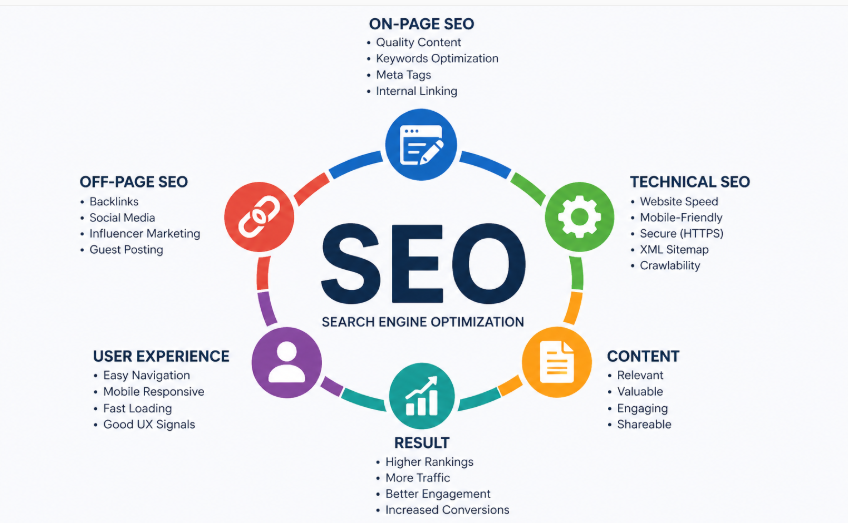
Power of SEO: How to Grow Your Business Online Search Engine Optimization (SEO) is one of the most important pillars of digital marketing (DM). It helps businesses improve their online visibility and rank higher on search engines like Google. In today’s competitive digital world, having a website is not enough; it must be optimized properly so that potential customers can easily find it. SEO mainly focuses on driving organic (free) traffic to a website. Unlike paid ads, SEO brings long-term results and builds credibility. When a website appears on the first page of search results, users are more likely to trust it. This is why businesses invest heavily in SEO as part of their digital marketing strategy. There are three main types of SEO: On-page SEO, Off-page SEO, and Technical SEO. On-page SEO includes optimizing website content, using relevant keywords, improving meta titles and descriptions, and creating high-quality content. Keywords play a crucial role here because they help search engines understand what the content is about. For example, if someone searches for “best digital marketing services,” a well-optimized page can rank higher for that query. Off-page SEO focuses on building the website’s authority through backlinks. Backlinks are links from other websites that point to your site. When high-quality websites link to your content, search engines consider your site trustworthy and rank it higher. Activities like guest posting, social sharing, and influencer collaborations are part of off-page SEO. Technical SEO deals with the backend of a website. It ensures that the website is fast, mobile-friendly, and easy for search engines to crawl and index. Factors like page speed, secure connection (HTTPS), proper URL structure, and XML sitemaps are important in technical SEO. A technically strong website improves user experience and helps in better rankings. Content is the heart of SEO. Creating valuable, relevant, and engaging content is essential for success. Blogs, articles, videos, and infographics not only attract users but also keep them engaged. Regularly updating content signals to search engines that the website is active and relevant. Quality content also increases the chances of earning backlinks. Another important factor in SEO is user experience (UX). Search engines prioritize websites that provide a good experience to users. This includes easy navigation, fast loading speed, and mobile responsiveness. If users spend more time on a website and interact with its content, it sends positive signals to search engines. Local SEO is also gaining importance, especially for small businesses. It helps businesses appear in local search results when users search for services “near me.” Optimizing Google Business Profile, using location-based keywords, and collecting customer reviews are key strategies in local SEO. SEO is constantly evolving due to changes in search engine algorithms. Therefore, staying updated with the latest trends and practices is essential. Voice search, AI-based search, and mobile-first indexing are some of the recent developments in SEO. In conclusion, SEO is a powerful tool in digital marketing that helps businesses grow online. It increases visibility, drives organic traffic, and builds trust among users. By focusing on quality content, proper optimization, and user experience, businesses can achieve long-term success in the digital world.

Digital Marketing
blog

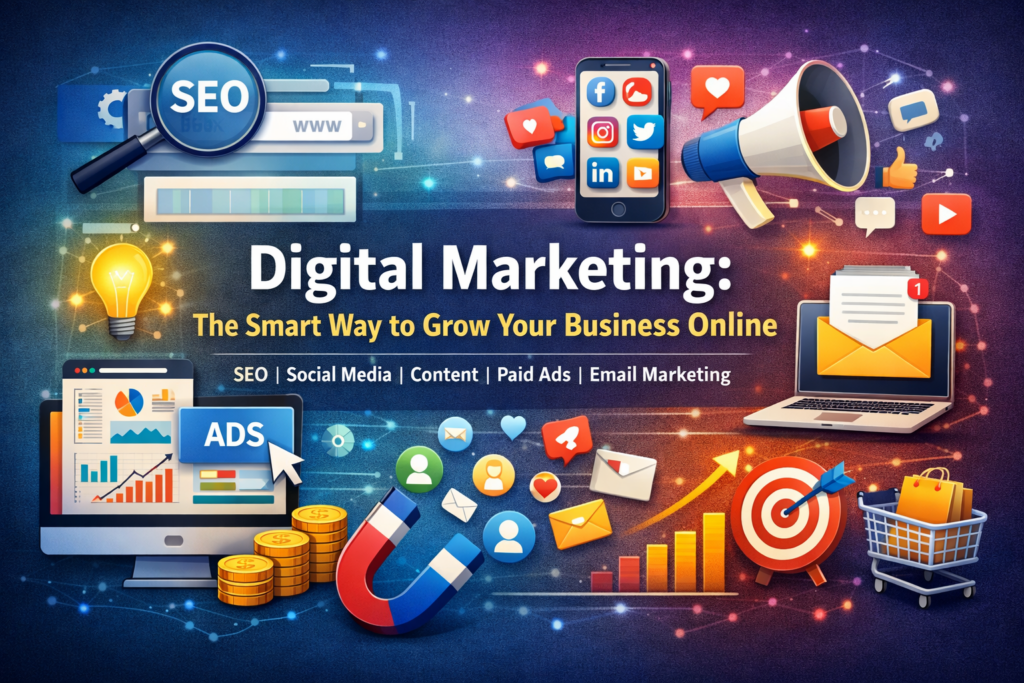
Digital Marketing: The Smart Way to Grow Your Business Online

Digital Marketing: The Smart Way to Grow Your Business Online   In today’s fast-moving digital world, traditional marketing alone is no longer enough. Customers spend most of their time online—searching on Google, scrolling social media, watching videos, and shopping on e-commerce platforms. This is where digital marketing plays a powerful role. Digital marketing is the promotion of products, services, or brands through online channels to reach the right audience at the right time. One of the biggest advantages of digital marketing is reach. Unlike offline marketing, which is limited by location, digital marketing allows businesses to connect with customers globally. Whether you are a small local business or a large brand, digital platforms give you equal opportunities to grow, compete, and build visibility. Key Components of Digital Marketing :-   Search Engine Optimization (SEO) :-SEO focuses on improving a website’s visibility on search engines like Google. When users search for products or services, SEO helps your website appear on the top results organically. Good SEO includes keyword research, quality content, fast website speed, and mobile optimization. It builds long-term traffic and trust. Search Engine Marketing (SEM / Google Ads) :-SEM involves paid advertising on search engines. With Google Ads, businesses can instantly appear at the top of search results by bidding on keywords. It is cost-effective, measurable, and delivers quick results, making it ideal for lead generation and sales. Social Media Marketing (SMM) :-Social media platforms such as Instagram, Facebook, LinkedIn, X (Twitter), and YouTube help brands connect directly with their audience. Social Media Marketing includes both organic content (posts, reels, stories) and paid ads. It boosts brand awareness, engagement, and customer loyalty. Content Marketing :-Content is the heart of digital marketing. Blogs, videos, infographics, reels, and podcasts educate, inform, and inspire audiences. High-quality content builds trust and positions a brand as an expert in its industry. Email Marketing :-Email marketing remains one of the most effective digital strategies. It helps nurture leads, retain customers, and promote offers directly to inboxes. Personalized emails increase conversions and maintain long-term relationships with customers. Affiliate & Influencer Marketing :-Brands collaborate with affiliates and influencers to promote products to their audience. This strategy builds credibility and reaches niche markets faster through trusted voices. Why Digital Marketing Is Important   Digital marketing is measurable. Tools like Google Analytics and Meta Ads Manager allow businesses to track performance, clicks, conversions, and ROI in real time. This data helps improve strategies and reduce wasted spending. It is also cost-effective compared to traditional advertising. Businesses can start with small budgets, target specific audiences, and scale campaigns based on results. Another key benefit is customer engagement. Digital platforms allow two-way communication through comments, messages, reviews, and feedback. This builds strong relationships and improves brand reputation. Digital Marketing in E-Commerce   For e-commerce businesses, digital marketing is essential. SEO brings organic traffic, social media creates brand awareness, paid ads drive instant sales, and email marketing boosts repeat purchases. A strong digital strategy directly impacts online revenue and growth. Conclusion   Digital marketing is no longer optional—it is a necessity for business success. With the right mix of SEO, social media, content, ads, and email marketing, brands can build visibility, trust, and long-term growth. In a digital-first world, businesses that adapt and invest in digital marketing stay ahead of the competition and connect better with their customers.  

blog

Performance Marketing in Digital Marketing: A Results-Driven Advertising Approach

Performance Marketing in Digital Marketing: A Results-Driven Advertising Approach Performance marketing is a results-driven approach to digital marketing where advertisers pay only when a specific action occurs. These actions can include clicks, leads, app installs, sign-ups, or sales. Unlike traditional advertising, where brands pay upfront for exposure, performance marketing focuses on measurable outcomes and return on investment (ROI). In performance marketing, every campaign is tracked using data and analytics tools. Marketers can see exactly how many users clicked an ad, filled out a form, or completed a purchase. This transparency makes it easier to optimize campaigns and allocate budgets more effectively. Businesses of all sizes prefer performance marketing because it reduces risk and increases accountability. Common channels used in performance marketing include search engine advertising (such as pay-per-click ads), social media ads, affiliate marketing, influencer partnerships, native advertising, and programmatic display ads. Platforms like Google Ads, Meta Ads, LinkedIn Ads, and affiliate networks play a major role in executing these campaigns. Each channel allows precise audience targeting based on demographics, interests, behavior, and intent. One key feature of performance marketing is tracking and attribution. Marketers use tracking pixels, cookies, UTM parameters, and conversion APIs to understand which ad or channel generated a result. Attribution models help assign credit to different touchpoints in the customer journey. This data-driven insight supports continuous testing and improvement. Performance marketing typically works on pricing models such as CPC (cost per click), CPA (cost per acquisition), CPL (cost per lead), CPI (cost per install), and CPS (cost per sale). Advertisers choose the model based on campaign goals. For example, an app company may focus on CPI, while an e-commerce brand may optimize for CPS or ROAS (return on ad spend). Optimization is an ongoing process in performance marketing. Marketers regularly test ad creatives, headlines, landing pages, audience segments, and bidding strategies. A/B testing helps identify what performs best. Small improvements in conversion rate or click-through rate can significantly increase overall campaign performance. Another important element is funnel strategy. Performance marketing is not just about traffic; it also involves converting users through well-designed landing pages, strong calls to action, and follow-up nurturing through email or retargeting ads. Retargeting helps re-engage users who showed interest but did not convert initially. In summary, performance marketing is a highly measurable, flexible, and ROI-focused form of digital marketing. By paying only for results and continuously optimizing through data, businesses can grow faster and more efficiently in the competitive digital landscape.

Scroll to Top